Resource Center
Research, guides, and real-world insights on online proctoring; helping your program deliver results that are fair, trustworthy, and defensible.
10M+
Assessments secured
Zero
Data breaches in 12+ years
98%
Client retention rate
120+
Resources published
Featured article

Trust by Evidence: A New Framework for Defensible AI Decisions
Integrity Advocate has released a new whitepaper, Trust by Evidence, introducing a framework that connects AI due process, learner rights, and credential security into one model for defensible AI-assisted assessment. This post walks through what the framework covers, why AI adoption alone no longer settles the integrity question, and links to the full whitepaper download.
Assessment integrity used to mean one thing: was the exam monitored? That question is no longer enough. AI now plays a role in identity verification, proctoring flags, authorship review, scoring, and credential validation, and each of those touchpoints can be challenged.
Confidence in an outcome isn't just about whether AI was accurate. It's about whether the decision it contributed to can be explained, reviewed, appealed, and verified after the fact.
As AI becomes embedded deeper into assessment, institutions are being asked a more pointed question: Can you defend the decision AI helped you make?
That question requires more than accurate technology. It requires a system.
In our latest whitepaper, Trust by Evidence, CEO Brandon A. Smith introduces a framework that connects AI due process, learner rights, and credential security into one model for defensible outcomes.
{{download-resource-cta}}
The Shift From AI Adoption to Defensible Outcomes
For the past several years, the conversation in education and credentialing has centered on adoption: which AI tools to use, how to deploy them, how accurate they are. That conversation is largely settled. Most programs already use AI somewhere in the assessment lifecycle.
What hasn't been settled is defensibility. When an AI-influenced decision is challenged, whether by a learner, an employer, or a regulator, an institution needs to answer a specific set of questions: was there notice, meaningful human review, supporting evidence, and a path to appeal? If any of those answers are unclear, the decision isn't defensible, and the institution is exposed right along with the learner.
The next major challenge in education isn't AI adoption. It's building outcomes that hold up under scrutiny.
Why Treating AI as a Single Safeguard Creates Risk
Many programs rely on AI to do one job: flag anomalies. That model treats a flag as a finding rather than a signal, and it breaks down under three conditions:
- No documented process exists for what happens after a flag is raised.
- Human review means approving the AI's output rather than independently evaluating it.
- There's no clear path for the learner to respond, and no record for the institution to point to later.
Any one of those gaps makes an outcome difficult to defend. Together, they create real exposure, not just to individual learners, but to the institution's accreditation standing, employer trust, and legal risk.
The Trust by Evidence Framework
The whitepaper introduces Trust by Evidence, a framework that connects three ideas typically treated in isolation:
AI Due Process: A fair, documented process for any consequential decision AI contributes to, so a flagged learner has an actual process to walk through rather than a black box to accept.
The Learner Rights Layer: Seven specific rights, to know, to meaningful human review, to explanation, to evidence, to appeal, to proportionality, and to verification, that turn "the system flagged it" into a decision an institution can explain and stand behind.
The Credential Security Trifecta: A secure chain of trust connecting learning, assessment, and credentialing, where a weakness in any one layer undermines the others.
Individually, each idea is familiar. Together, they hold up under scrutiny from everyone with a stake in the outcome: the learner, the institution, employers, regulators, and the public.
What a Defensible AI-Assisted Decision Looks Like
A defensible process doesn't rely on confidence in the algorithm. It provides an actual record. It lets an institution answer, with certainty:
- Was the individual notified that AI was involved?
- Did a qualified reviewer examine the evidence, not just the score?
- Could the individual respond before a consequence was applied?
- Is there a documented, time-bound appeal path?
- Can the outcome be explained to someone outside the institution?
These are governance questions as much as technical ones. Answering them well protects accreditation standing, employer trust, and learner confidence all at once.
What You'll Learn in the Whitepaper
The full whitepaper expands on:
- Why algorithmic due process, procedural justice, and automation bias research all point toward the same conclusion for education
- The Defensible Outcomes Responsibility Matrix, a governance tool for assigning clear ownership across vendors, institutions, and credential issuers
- The five-stage AI Appeals Framework, walked through with a real worked example of a contested proctoring flag
- Sector-specific guidance for K-12, higher education, workforce certification, and employers
- A candid discussion of the framework's limitations, including cost, scale, and surveillance risk
It's written for compliance leads, credentialing bodies, assessment teams, and program leaders responsible for the outcomes their institution has to stand behind.
{{post-cta}}
All resources

Key Takeaways from ASAE Annual 2026 | What Indianapolis Told Us About the Future of Association Learning
August 21, 2026
|
5 min read
At ASAE Annual, it was clear that continuing education has become a strategic driver of member value, revenue, and reputation. As associations scale learning online, verification and assessment integrity are essential to ensuring every credential remains credible and meaningful.
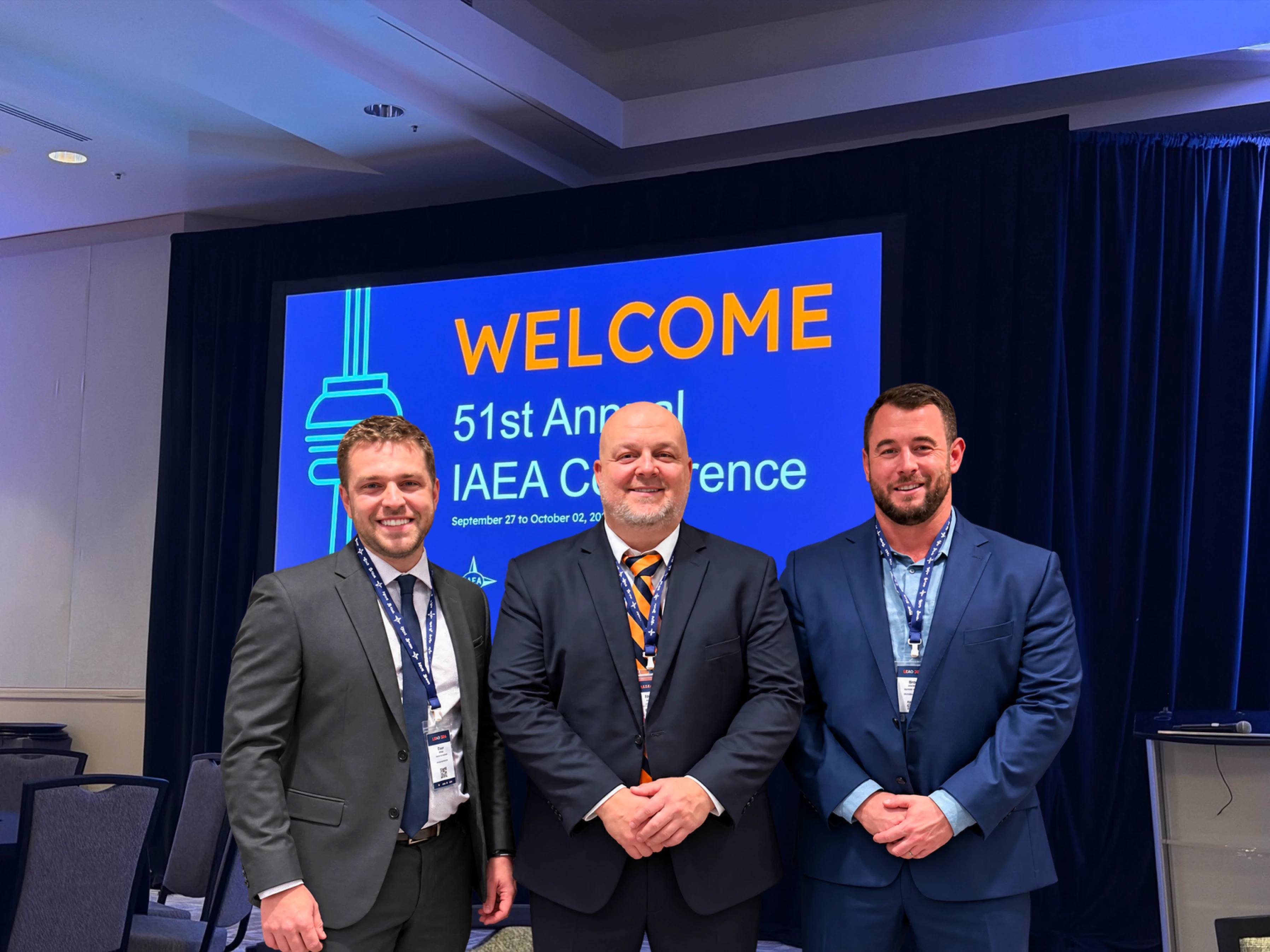
I just got back from ASAE's Annual Meeting in Indianapolis, and I'm still working through everything I heard. If you've never been, ASAE Annual is the biggest gathering of association executives in the country, and this year's theme was Driven by Purpose. That framing turned out to fit the week better than I expected, because the show floor and the session rooms were both buzzing with the same underlying question: what does it actually mean to serve your members well right now?
I went in expecting to hear a lot about membership growth and event strategy. I came home with something different. Almost every conversation I had, whether it was in a session, at a sponsor booth, or over coffee between keynotes, eventually circled back to learning. Specifically, how associations build it, how they prove it works, and how they protect it once it's out in the world.

1. Continuing education isn't the "informal" side of the business anymore
For a long time, a lot of associations treated their learning and CE offerings as a member benefit that lived somewhat separately from the core business. Nice to have, good for retention, not exactly mission-critical. That framing is gone.
What I heard over and over in Indianapolis is that association leaders now think about learning the way they think about credentialing: as a structured, accountable framework, not a loose collection of webinars and one-off workshops. IACET came up constantly, and for good reason. Getting IACET accredited and issuing verifiable CEUs isn't a box to check anymore, it's how associations signal that their education actually meets a recognized standard. That shift, from informal to formal, from "nice to have" to genuinely important, is probably the single biggest theme I took away from the whole week.
2. Formal CE training has real, measurable value, and associations are done treating it as an afterthought
Related to that first point: I sat in on more than one session where association leaders talked about the actual return on investing in properly structured continuing education. It's not just about compliance or member satisfaction scores. Strong CE programs are becoming a genuine revenue line and a genuine reputational asset. Members are willing to pay for training they trust. Employers are willing to sponsor it. Regulators and licensing bodies are willing to recognize it. But none of that works if the learning underneath it is soft. The associations getting this right are the ones investing in real instructional design, real assessment, and real verification, not just slapping a certificate on the end of a video.
3. Relevance is out. Impact is what associations are actually chasing now
This was the idea that really took some time to realize, and it came from a presentation from Bill Sheehan, Global Head of Association Strategy at D2L. Bill put it something like this: associations are no longer striving just to be relevant, they need to strive to provide impact.
At first that sounds like a subtle rewording. It isn't. Relevance is a passive approach. It's about staying in the conversation. Impact is active, and it cuts both ways. I think the important thing about this point was that impact can be positive or negative, and a lot of associations aren't accounting for the downside risk. If your learning programs are weak, if credentials can be gamed, if there's no way to verify who actually did the work, you're not just failing to be relevant. You're actively creating negative impact and negative relevance in your market. The flip side is just as true. When an association has a learning program that's genuinely strong, genuinely verified, and backed by a track record of real outcomes, that reputation compounds. It becomes a reason members join, a reason employers recognize the credential, and a reason the association keeps mattering long after "staying relevant" would have run its course.
That distinction reframed a lot of what I heard for the rest of the conference. Every session about member engagement, every booth conversation about growth, all of it came back to whether the learning experience behind the association's brand could hold up to scrutiny.
4. Association leaders care deeply about their members, and that's exactly why this matters
I want to name something that came through clearly in every room I sat in: the people running these associations are not thinking about learning as an abstract strategy exercise. They're thinking about their members as real people trying to advance their careers, keep their licenses current, and get genuine value out of their membership dollars. That care is what's driving the push toward more formal, more rigorous learning programs in the first place. Leaders don't want to hand their members a credential that doesn't mean anything. They want to hand them something that actually opens doors and helps them create career impact.
5. No association can scale that impact alone, and that's exposing some hard problems
The tension nobody can avoid: every association I talked to wants to build stronger, more credible learning programs, and almost none of them have the internal edtech capacity to do it at scale by themselves. That's where the partnership conversations came in, again and again. Associations know they need help from learning platforms, assessment tools, and credentialing technology to reach more members without diluting quality.
But moving all of this online, at scale, has created new problems that didn't exist when these programs meant a room full of people and a sign-in sheet. Fake learners. Shared logins. Credentials issued to someone who never actually did the work. Once a program moves online, the question stops being "is our content good" and becomes "can we actually prove who earned this." That's a hard problem, and it's one that's only getting more visible as more learning moves off the conference room floor and onto a screen.
Where this leaves associations
Walking away from Indianapolis, the thread connecting all of this was pretty clear to me, and it kept circling back to that "Driven by Purpose" theme. Purpose isn't a slogan on a conference banner. It's the reason associations are building real, structured, IACET-aligned learning programs in the first place. They care about their members and they know relevance alone isn't enough anymore. But that same shift toward formal, high-stakes learning is exactly what makes verification and integrity non-negotiable. A credential is only as good as the association's ability to stand behind it, and that means knowing, with confidence, that the person on the other side of the screen is who they say they are and did the work they're claiming credit for.
That's the piece we spend our time on at Integrity Advocate, and it's why conversations like this one always feel personal to me. If your association is investing in building the kind of learning program Bill Sheehan was describing, one that creates real impact instead of just chasing relevance, let's talk about how to protect it. Book a demo with our team and we'll walk you through how we help associations secure their learning programs, verify real learners, and make sure every credential you issue actually means something.
{{post-cta}}

What Happens After an Exam Flag? Inside Human Review
September 3, 2026
|
5 min read
Most proctoring platforms stop at the flag. Integrity Advocate does not. This post walks through what a trained reviewer actually looks at, how a decision gets documented, and what happens if a test taker disputes the outcome, so admins know exactly what stands behind every result.

An automated flag is not a decision. It is a signal that something in a session looked different from expected, a glance away from the screen, a second voice in the room, a browser tab that opened at the wrong moment. What happens next is where most platforms stop talking, and it is exactly where the real work of assessment security begins.
For programs issuing results that carry weight, whether that is a certification, a compliance sign-off, or an academic grade, the review process behind a flag matters as much as the flag itself. Here is what actually happens.
What triggers a flag during an online exam?
Flags come from a mix of signals collected during the session: unusual movement, a change in lighting or audio, a browser event, an identity mismatch at check-in. None of these signals mean a test taker did anything wrong. They mean the system noticed something worth a second look.
This is the point where the two approaches to online proctoring diverge. A platform built on automated decisioning treats the flag as close to final, sometimes reducing a result to a risk score with little context behind it. A platform built on human review treats the flag as the start of a process, not the end of one.
What does a human reviewer actually look at?
Once a session is flagged, a trained reviewer opens the recording alongside the full context of the exam: the timestamp of the flag, the identity verification completed before the session started, and the behavior immediately before and after the triggering moment.
The reviewer is looking for the difference between a pattern that constitutes a violation and a pattern that does not, something an algorithm has no way to judge. A test taker glancing off screen to think through a problem looks identical to a system as a test taker glancing at a second monitor. A person can tell the difference in seconds. That distinction is the entire value of putting a trained reviewer behind every flag before any outcome is issued, not just the flags a system considers high risk.
{{post-stat-highlight}}
How is a review decision documented?
Every reviewed session results in a written outcome, not a number. That record includes what was flagged, what the reviewer observed, and the reasoning behind the final determination. This is the piece that turns a proctoring tool into a source of evidence a program can actually stand behind.
When a result gets challenged later, whether by a student, a candidate, an employer, or a regulator, the program needs more than a score. It needs a record that shows a real person looked at the specific moment in question and reached a specific, explainable conclusion. That record is what makes a result defensible.
What happens if a test taker disputes the outcome?
A documented review gives programs somewhere to start when a result is questioned. Instead of pointing to an automated flag and hoping it holds up, an administrator can point to a reviewed session, a timestamped recording, and a reasoned explanation. That is the difference between a decision a program can explain and one it can only report.
This matters most in the moments programs plan for least: an appeal from a student, a compliance audit from a regulator, or a challenge to a certification result years after the exam took place. A defensible process is only defensible if it holds up when someone actually asks.
How is this different from a fully automated system?
Fully automated systems are fast and they scale easily, but a score with no context is difficult to defend and carries real fairness risk. In-person testing centers solve the trust problem with human judgment, but they cannot scale and the cost is often prohibitive for programs running at volume.
Human review built into every session, not offered as a premium add-on, is what lets a program scale online without losing the judgment that makes a result defensible. As AI-assisted answer generation makes behavioral flags harder to interpret on their own, that judgment is not a nice-to-have. It is the piece of the process that automated systems cannot replicate.
Fair, trustworthy, and defensible is not a tagline. It is what a documented, human-reviewed process actually produces, session by session, for every program that runs on it.
{{post-cta}}

What Makes a Proctored Result Defensible? A Guide for Compliance and Certification Programs
August 18, 2026
|
5 min read
When a candidate challenges an exam result, an automated flag isn't enough to defend it. This post breaks down what "defensible" actually requires: verified identity, a documented human judgment behind every flagged session, and an audit trail that connects evidence to outcome. It also covers what regulators and accrediting bodies look for, and why liability for a flawed process typically lands on the program running the assessment, not the software vendor.
A candidate fails a high-stakes exam, and they are not willing to accept it quietly. They file a complaint. They ask their lawyer to write a letter. They ask your program to explain, in writing, exactly what happened during their exam and why the result stands.
This is the moment every compliance officer and certification director plans for but hopes never arrives. And it is the moment that reveals whether your proctoring process was ever built to survive scrutiny in the first place.
What does "defensible" actually mean in exam proctoring?
A defensible result is one your program can support with a documented, reasoned explanation, not just a data point. It means you can show who took the exam, what happened during it, how any concern was evaluated, and how the final decision was reached. If any part of that chain is missing, the result is a claim, not a record.
Most online proctoring tools were not built with this standard in mind. They were built to flag. Flagging is useful, but it is only the first step. A confidence score or an automated alert tells you that something looked unusual. It does not tell you whether that pattern was a violation, an environmental glitch, or a candidate adjusting their webcam. That distinction is exactly what a regulator, an accreditor, or opposing counsel will ask about, and "the system flagged it" is not an answer that holds up.
Why an automated flag is not a decision
An algorithm can tell you that a candidate looked away from the screen twelve times. It cannot tell you whether they were checking notes, reading a printed formula sheet they were permitted to use, or glancing at a second monitor they forgot to disclose. It also cannot tell you whether an answer was written by a strong candidate under pressure or generated by an AI tool with no visible behavioral signal at all. That kind of judgment requires context, and context requires a person.
This is the gap that puts AI-only proctoring programs at risk. As AI-assisted cheating grows more sophisticated, the tools most exposed are the ones relying entirely on automated detection, because there is no human judgment behind the flag to explain what it actually means. Growing AI adoption is not a side issue for defensibility. It is becoming the central one.
What the Integrity Advocate review pipeline produces
Integrity Advocate is built around a simple principle: AI identifies the flags, and a trained person makes the decision. That review is standard at every price point, not something reserved for a higher tier, and it runs across the full lifecycle of the exam rather than a single monitoring window.
Before the exam. Identity verification confirms who is actually sitting the assessment, creating the first link in the chain of evidence a challenged result depends on.
During the exam. Sessions are monitored without downloads or extensions, so candidates move through the process with minimal friction while the system captures what actually occurred.
When something is flagged. A trained reviewer examines the session, applies context an algorithm cannot, and confirms or dismisses the concern based on what actually happened, not just what the system detected.
After the exam. The outcome is documented in a report that includes the verified incident, the reviewer's notes, and the supporting evidence behind the finding.
That connected process, from verified identity through to a validated result, is what separates a system that produces a defensible record from one that produces a queue of unreviewed alerts.
What regulators and accrediting bodies actually look for
Regulatory scrutiny of online proctoring has increased steadily, and the pattern across jurisdictions is consistent: the organization running the assessment, not the software vendor, carries the liability. Under GDPR, the organization is treated as the data owner while the proctoring tool is the data processor, meaning responsibility for lawful, proportionate data collection sits with the program itself. Frameworks like FERPA and PIPEDA carry similar expectations for education and Canadian programs. In the United States, biometric privacy laws in states like Illinois have resulted in significant penalties tied to consent and retention practices, again with liability landing on the organization collecting the data.
Accrediting and awarding bodies apply a related lens, even when their guidance is not framed as legislation. Their central questions tend to be the same ones a court would ask: Was the assessment delivered fairly and consistently for every candidate? Was oversight proportionate, or invasive in a way that damages trust in the outcome? And if a result is challenged, is there a documented basis for the decision, or only a system-generated alert?
Programs that treat privacy as an architectural decision rather than a policy statement, meaning the system only collects what it actually needs, are in a stronger position on all three questions. So are programs that can point to a named person who reviewed the evidence, not just a threshold that was crossed.
The audit trail: what it includes and why it holds up
When a result is challenged, the audit trail is the record your program stands behind. A defensible one keeps three things distinct: the signal an algorithm detected, the finding a reviewer confirmed, and the decision your program issued based on that finding. Collapsing those into a single automated step is exactly what makes a result hard to defend later.
A complete trail includes verified identity at the start of the session, the recorded evidence tied to any flagged moment, the reviewer's documented judgment on that evidence, and the final outcome connected clearly back to all of it. That structure is what allows a compliance team to answer a regulator's question in minutes rather than reconstructing the story after the fact, and it is what turns a disputed result into one your program can confidently stand behind.
{{post-cta}}

When Proctoring Tools Become an IT Problem
July 31, 2026
|
5 min read
Downloaded software, browser extensions, and compatibility checks don't just frustrate test takers, they generate a real, recurring cost in help desk tickets and IT hours. See what happens to that cost when a proctoring platform removes the download requirement entirely.
Every proctoring tool that requires a download, an extension, or a compatibility check has a hidden line item: the help desk. It rarely shows up in a vendor's pricing page, and it almost never gets factored into a buying decision. But it shows up every semester, every testing window, every audit season, in the form of support tickets, IT hours, and test takers who never make it into the exam.
If you're budgeting online proctoring as a software expense instead of an operational expense, you're probably overlooking one of its biggest costs: IT support.
What "IT support required" actually costs
Most proctoring tools that rely on downloaded software or browser extensions, create a predictable chain of costs that has nothing to do with the exam itself:
- Pre-exam support tickets. Test takers on locked-down work laptops, older devices, or unfamiliar browsers can't install what the tool requires, so they contact support before they've even started the exam.
- IT staff time. Someone has to triage those tickets, walk people through installation, or approve exceptions for devices that can't run the software at all.
- Delayed or missed exams. Every minute spent troubleshooting a download is a minute test takers aren't spending on the assessment, and some never get past the install screen.
- Compounding cost at scale. A support rate that looks manageable at 200 exams becomes a real operational burden at 20,000.
None of this is a one-time setup cost. It repeats every testing cycle, for as long as the tool requires local installation to function. IT budgets in higher education are already stretched, with EDUCAUSE's most recent benchmarking data putting median central IT spend at roughly $1,600 per student FTE. A proctoring tool that quietly adds to that load is a cost worth naming, not absorbing.
The number that should be in your budget: support contact rate
Support contact rate, the percentage of test takers who need to reach out for help before or during an exam, is one of the most under-used numbers in vendor evaluation. It's a direct proxy for how much of your team's time a proctoring tool will quietly absorb.
A platform with nothing to install has nothing to break, misconfigure, or get blocked by a firewall, and that shows up consistently in how programs actually run at scale:
- BCIT proctored more than 13,000 remote exams in five months and kept student support requests under 1%.
- NPI reduced its academic integrity incident rate by more than half after removing the technical friction that was generating false flags in the first place.
- Smart Serve Ontario trains 150,000 people annually with a completion rate above 99.9% without support intervention.
Those aren't outcomes you get from a better help article. They're outcomes you get from removing the reason people needed help in the first place.
Why no-install isn't just a convenience feature
It's easy to file "no downloads required" under user experience and move on. In practice, it's an operational and financial decision that affects three groups at once.
Test takers launch directly from their LMS, on any device or browser, with identity verification completed automatically at check-in. There's no plug-in to find, no extension to approve, no compatibility check to fail. (For a closer look at how this compares across the market, see Top No-Download, Browser-Based Proctoring Tools.)
Administrators and IT teams stop being the first line of defense for a vendor's technical requirements. Rollouts move faster because there's no local software to deploy, license, or troubleshoot across a fleet of devices your team doesn't fully control, especially when test takers are using their own laptops. That's also what makes integration directly with your existing LMS possible without a parallel IT project.
Programs avoid the credibility problem that comes with technical friction: when a meaningful share of test takers can't complete an exam because of a download issue, that's not a security event, but it is a program integrity event. It raises fair, hard questions about whether every test taker had equal access to demonstrate what they know.
The connection to defensibility
Complete assessment security depends on more than catching irregular behavior. It depends on every test taker having a fair, equal path into the exam, and on every flagged session being reviewed by a trained person before any outcome is issued, not just processed by an algorithm.
A tool that quietly filters out test takers who couldn't install its software isn't more secure. It's excluding people before the exam even starts, and that's a fairness problem your program will eventually have to explain. A no-install platform backed by human review removes that exclusion at the front door and gives every reviewed outcome a record your program can actually stand behind.
What to ask before your next renewal
The next time a proctoring vendor's pricing page crosses your desk, the software cost isn't the full picture. Ask for the support contact rate. Ask what happens when a test taker's device can't run the required software. Ask how many IT hours your team spent last testing cycle on issues that had nothing to do with academic integrity.
If the answer involves a help desk queue, that's not a technology problem. It's a design choice, and it's one your program is paying for every single testing window.
{{post-cta}}

Case Study: How CMRAO Set Education Standards for Condominium Managers
February 4, 2026
|
5 min read
The Condominium Management Regulatory Authority of Ontario (CMRAO) needed to deliver a new licensing course and proctor its exams to meet Ontario's education and licensing requirements for condominium managers. CMRAO adopted uxpertise's all-in-one LMS with integrated online proctoring, powered by Integrity Advocate, to deliver its Excellence in Condominium Management course entirely online while administering secure, proctored exams within the same system. Since 2021, more than 2,500 students have graduated through the program.
The Condominium Management Regulatory Authority of Ontario (CMRAO) is a not-for-profit corporation established in November 2017 by the Government of Ontario under the Condominium Management Services Act, 2015. As a regulator, CMRAO provides consumer protection for Ontarians living and investing in condominiums by regulating and licensing condominium managers and management provider businesses.
Executive Summary
Challenge: CMRAO needed to find a learning management system to host a new course and a solution for online exam proctoring. The organization created a course to obtain a limited licence, hosted online, requiring a 75% passing grade. Given the regulated nature of the industry, exam integrity through proctoring was essential.
Solution: CMRAO was initially looking for two separate solutions but found uxpertise, which offered both an LMS and integrated proctoring in one platform. CMRAO was looking for a cost-effective, Canadian solution, and uxpertise was the match.
Results: Since 2021, there have been more than 2,500 graduates of the Excellence in Condominium Management course. CMRAO started with 3 classes in 2021 and grew to 34 classes by 2024, an 11x increase in sessions.
Deliver Their Course and Ensure Integrity
To meet new education and licensing requirements for condominium managers, CMRAO adopted uxpertise's LMS combined with its integrated online proctoring service as a cost-effective, all-in-one solution. The platform allowed CMRAO to deliver the new Excellence Course entirely online, ensuring accessibility during COVID-19 while maintaining the integrity of instructor-led training. It also let them administer secure, proctored exams within the same system, streamlining the licensing process and reducing administrative complexity.
CMRAO was able to easily duplicate courses and exams for recurring sessions, with independent statistics for tracking learner progress and completion. The entire setup took only six weeks, handled primarily by one administrator, with responsive customer service resolving technical questions rapidly along the way.
Results
The CMRAO has successfully launched its Excellence in Condominium Management course, completing its mandate to set the education standard among condominium managers. From no formal training to a comprehensive course with a proctored exam, CMRAO changed the industry and advanced its mission to enhance consumer protection.
The numbers reflect that growth: CMRAO now sees an average of 220 monthly active users on the platform, with approximately 3,000 learners registered for the course in under four years. More than 1,500 learners have taken a proctored exam using the service launched in 2023, and more than 2,500 students have graduated between November 2021 and August 2025.
What's Next
Four years after launch, CMRAO is ready to expand its offering and use the platform to its full potential. Planned initiatives include continuing education courses for licensed condominium managers to support ongoing professional development, and internal staff training programs covering customer service, communication skills, and emotional intelligence.
{{post-block-quote}}
{{post-cta}}

Case Study: How Canadian Food Safety Group Expanded Access to Proctored Food Safety Training
June 5, 2025
|
5 min read
Canadian Food Safety Group operates in a complex environment where each province mandates some level of food handler training, but few require all workers to certify, leaving critical compliance gaps. Many of the workers who need this training are supporting families or funding their own education, so training needed to stay flexible, affordable, and accessible. Partnering with Integrity Advocate allowed Canadian Food Safety Group to deliver secure, proctored assessments online, with nothing to install, expanding access to food safety training for workers across Canada without driving up costs.
Canadian Food Safety Group needed a way to expand access to trusted food safety certification without sacrificing affordability or authenticity. Partnering with Integrity Advocate allowed them to deliver secure, proctored training online, available on mobile with nothing to install. That's what happens when accessibility meets integrity.
Key Outcomes
- Reduced training costs passed on to learners
- Strengthened national food safety compliance
- Scalable online proctoring with no installation
- Improved accessibility for learners across Canada
Challenge
Canadian Food Safety Group operates in a complex environment. Each province mandates some level of training, yet most don't require all food handlers to certify, leaving critical compliance gaps. In an industry where many workers are supporting families or funding their education, training needs to be flexible, affordable, and accessible to succeed. Employers also had to see the value in training every staff member, not just those required by law.
To close the gap, Canadian Food Safety Group needed a solution that could expand access to training for all food handlers, not just those legally required to certify, deliver verified, proctored assessments without raising costs for learners or organizations, remove technical barriers like app downloads or scheduled sessions, and scale nationwide to reach tens of thousands of workers across a fragmented industry.
Recognizing these challenges, they made the strategic decision to move their food safety training online, but only with a trusted proctoring partner who could maintain authenticity, security, and affordability without compromise. That's where Integrity Advocate entered the picture.
Solution
Canadian Food Safety Group knew that education, not enforcement, was the key to lasting change. By making food safety training more accessible, ongoing, and affordable, they could raise compliance rates while fostering stronger, more cohesive teams who took pride in their work.
With Integrity Advocate's no-install proctoring solution, they were able to deliver verified online assessments without requiring downloads, installations, or technical support, offer a flexible, secure training experience that works across all devices and internet connections, and maintain the authenticity and integrity of certifications without driving up costs.
Food preparation is both an art and a science, and Canadian Food Safety Group understood that both demand skill, care, and consistency. By partnering with Integrity Advocate, they made it easier for food handlers across Canada to master both.
Results
By moving their training and assessments online with Integrity Advocate, Canadian Food Safety Group reduced operational costs and passed every dollar of savings directly back to their learners. Affordability remained at the forefront, without sacrificing the security and integrity of the certification process.
Choosing a trusted Canadian partner also delivered immediate advantages: seamless collaboration, responsive support, and the confidence that comes from working with a privacy-first solution built to meet their exact needs.
Backed by Integrity Advocate's ongoing support, Canadian Food Safety Group continues to expand access to food safety training nationwide, strengthening compliance, supporting workers, and helping businesses deliver safer, higher-quality service to every customer.
{{post-cta}}

Case Study: How My Food Service License Brought ANSI-CFP Accredited Certification Online
May 14, 2026
|
5 min read
When Chris Viso founded My Food Service License, he set out to do what many thought was impossible: move an in-person food protection training program fully online. ANSI-CFP's accreditation requirements for food management exams are extensive, requiring proctored exams, verified identification, and strict monitoring to prevent notes, cellphones, or outside assistance. Integrity Advocate became a trusted partner throughout the two-year process of building the exam and securing accreditation, and remains the proctoring foundation behind My Food Service License's continued growth today.
When Chris Viso founded My Food Service License, he was taking on what many thought would be an impossible task: moving an in-person training program into the internet age.
{{post-block-quote}}
Moving things online was the obvious solution, but there were serious regulatory hurdles to clear first.
Challenge
"ANSI-CFP requirements for food management exams are extensive," Viso explained. "It has to be a proctored exam; you must verify the identification of the individual taking it. The examinee can't be with another person; they can't have things on their desk, they can't use notes, have cellphones, all that has to be strictly monitored. We have to prove that we're doing those things to the accreditation board."
The My Food Service License team spent two years building an online exam and completing the accreditation application. Throughout the process, Integrity Advocate was a trusted partner that helped bring Viso's vision to life.
ANSI-CFP Expertise
From the start, Integrity Advocate was committed to helping My Food Service License get off the ground. "We came across Integrity Advocate early in the planning stages. They genuinely seemed excited about what we were doing; they had open arms in terms of, 'How can we get you there?'" Integrity Advocate's technical expertise and experience in the sector made them a trusted partner throughout the process, from understanding ANSI-CFP regulations to building out a rule set that satisfied them.
"I would highly recommend Integrity Advocate to anyone doing high- or low-stakes testing," Viso said. "The relationship, the support, the overall product is top of the line."
Integrity Advocate stood out because it didn't require a complicated process. There was nothing to download and no access code; users kept using what they were already familiar with. A key part of that was mobile support and the ability to deliver around-the-clock results, both major advantages for busy food service workers.
"The big seller was on-demand access," Viso added. "That, in and of itself, had the ability to put us out in front of our competitors."
A Trusted Partner
Integrity Advocate and My Food Service License were aligned on the vision, but the real test was still to come. Going live and ironing out last-minute issues can challenge any relationship. Fortunately, My Food Service License had a trusted partner in Integrity Advocate, and the two organizations worked together to ensure a successful launch.
"It was super easy," Viso said. "It really says a lot about how Integrity Advocate was committed to resolving anything that came up; I've never experienced that type of service from any partner I've ever had."
Growing Together
Since going live in September 2023, "we're growing month over month," Viso said. "Integrity Advocate has continued to provide the support we need. When things came up, they were resolved quickly. And as we've grown, they've continued to deliver a high level of service."
My Food Service License's online training and exam program may be straightforward, but its impact is significant. Properly trained and certified food service staff are the first line of defense against foodborne illness. Together, My Food Service License and Integrity Advocate are making rigorous training easy to access, without compromising the integrity and value of the certification process.
{{post-cta}}

Case Study: How AIM Group Brought Ofqual-Regulated Assessments Online
January 25, 2026
|
5 min read
AIM Qualifications and Assessment Group, a leading UK Awarding Organisation, recognized that online assessments would soon become the default, but needed a solution that met Ofqual's strict regulatory standards without adding complexity for learners or administrators. AIM partnered with Coelrind and Integrity Advocate to build a seamless, fully compliant remote assessment system that works on any device, requires no installations, and upholds exam integrity across multiple UK testing centres.
Digital transformation in assessment isn't as simple as swapping a classroom for a video call. It requires purpose-built technology and strong partnerships to get it right. AIM Qualifications and Assessment Group, a leading UK Awarding Organisation, recognized that online assessments would soon become the norm, but needed a solution that met Ofqual's strict standards without adding complexity for learners or administrators.
{{post-block-quote}}
Key Outcomes
- Full regulatory compliance and alignment with Ofqual's assessment standards
- Seamless accessibility with no plug-ins or installations required
- Mobile-friendly and user-focused, working on any device
- Scalable and cost-effective across multiple UK testing centres
- Minimized technical issues through pre-exam system checks and clear instructions
Challenge
Bringing regulated assessments online comes with high stakes. Security, compliance, and accessibility all need to align without creating unnecessary barriers for test-takers. AIM Group needed a solution that upheld assessment integrity while making the process seamless for learners and administrators alike.
In-person exams were costly and difficult to scale, requiring dedicated invigilators and significant administrative overhead. Most proctoring tools on the market weren't flexible enough, many required plug-ins, lacked tablet compatibility, and introduced unnecessary hurdles for learners. And compliance was critical: every assessment had to meet strict integrity standards to ensure qualifications remained credible in a digital format.
"We were addressing two very specific issues, the tablet issue and the plug-in issue, which were making it impossible to bring one of AIM's largest clients onboard," said John O'Sullivan of Coelrind.
Why Compliance Matters
As an Ofqual-regulated Awarding Organisation, AIM Group must meet the Office of Qualifications and Examinations Regulation's high standards for fairness and security, whether assessments are delivered in person or online. That meant adhering to evolving guidelines covering the responsible use of AI in assessment security, strict invigilation requirements to prevent misconduct, and technical standards ensuring online exams remain as rigorous as traditional assessments.
Solution
AIM Group worked with Coelrind and Integrity Advocate to tailor a remote assessment system that removed technical barriers while ensuring exam integrity. Coelrind provided the technical foundation through its learning and assessment platform, enabling AIM Group to manage exam delivery across multiple testing centres. Integrity Advocate ensured security and compliance with a no-install, mobile-friendly proctoring solution aligned with Ofqual's regulations. User experience remained a top priority throughout, with built-in system checks, clear instructions, and cross-device accessibility ensuring every learner could complete their exam without frustration.
"The main goal was to make this user-friendly, for the end users... to make sure that when they get to the live exam, it all works swimmingly," Bailey said.
Results
Now fully implemented, AIM Group's system has transformed assessment delivery. "It all seems to be working well. Everyone's got a great new asset to support their learners with," Bailey said.
"Integrity Advocate is really easy to work with, really fun to work with and very responsive," Bailey added. "There's always a quick turnaround for change requests; they've kept us updated with their progress. I would recommend them 100%."
AIM Group's experience highlights the complexity of getting online assessment right, especially when working with regulated qualifications. With the right technology and strong partnerships, it's possible to deliver a solution that's easy to use, cost-effective, and puts learners first.
{{post-cta}}

Case Study: How Alliance Safety Council Took High-Risk Training Remote Without Losing Legal Defensibility
February 24, 2025
|
5 min read
Alliance Safety Council (ASC) has spent over 60 years setting the standard for high-risk workforce training in petrochemical, power generation, and manufacturing, industries where compliance isn't optional. Their in-person, proctored training model relied on identity verification and close monitoring to serve as an impartial third-party administrator for clients. As demand for remote training grew, ASC needed a solution that could match that legal defensibility without the logistical headaches, or the technical barriers that most online proctoring tools introduced. Integrity Advocate became that partner.
When safety training can mean the difference between life and death, there's no room for shortcuts. For over 60 years, Alliance Safety Council (ASC) has set the standard for high-risk workforce training, ensuring every program is legally defensible and fully compliant.
Key Outcomes
- Reduced travel and costs, as participants can now complete training from anywhere
- Improved access and scalability with a mobile-friendly system for on-site or remote training
- Maintained legal integrity through identity verification and participation monitoring
- Lower environmental impact from fewer miles traveled
Challenge
ASC serves high-risk industries like petrochemical, power generation, and manufacturing, where compliance isn't optional. To maintain legally defensible training records, ASC historically relied on in-person, proctored training. Every participant underwent identity verification and close monitoring, allowing ASC to serve as an impartial third-party administrator for its clients.
{{post-block-quote}}
Moving online risked losing the third-party oversight ASC relied on for compliance and legal defensibility. High travel costs and time off work created unnecessary barriers for workers, and most proctoring solutions on the market required software installations, failed security protocols, or introduced IT headaches for enterprise clients.
ASC needed a scalable, secure online proctoring solution that could match the integrity of their in-person process without adding complexity for learners. Beyond technology, they needed a partner who understood their challenges and could adapt alongside them.
"We didn't want to just be a customer of a software solution," Kohls emphasized. "We needed someone who had the level of patience and interest to come along on this road with us."
Results
With Integrity Advocate as a proctoring partner, Alliance Safety Council has redefined how high-risk workforce training is delivered, expanding access while maintaining the highest compliance standards. With mobile-friendly proctoring, legally defensible verification, and a trusted partner by their side, ASC has eliminated travel barriers, reducing time off work and operational costs as well as carbon footprint for participants. Workers can now complete training on-site or remotely, even during outages and unplanned events, while identity verification and participation monitoring keep training records legally defensible.
"We've never felt alone on this journey," Kohls said. "Integrity Advocate's expertise and commitment have been with us every step of the way."
A Partnership Built on Trust
Proper training protects lives, prevents accidents, and ensures workers in high-risk industries are fully prepared for their jobs. That's why finding the right partner matters: safety training isn't just about meeting requirements, it's about trusting that every worker has the skills they need to stay safe on the job.
"They've gone above and beyond to help us educate our customers," Kohls said. "There's no other vendor that would fly from Canada to South Louisiana to host a lunch-and-learn for 30 people. That's because we're more than just a customer to them, and they're more than just a vendor to us."
As workforce training evolves, Alliance Safety Council and Integrity Advocate continue to set the standard, ensuring safety programs meet the highest benchmarks for reliability, compliance, and real-world impact.
{{post-cta}}