Jun 17, 2026 | 4 min read
Key Takeaways from eAA | What “The Trust Imperative” Actually Means for Assessment Right Now

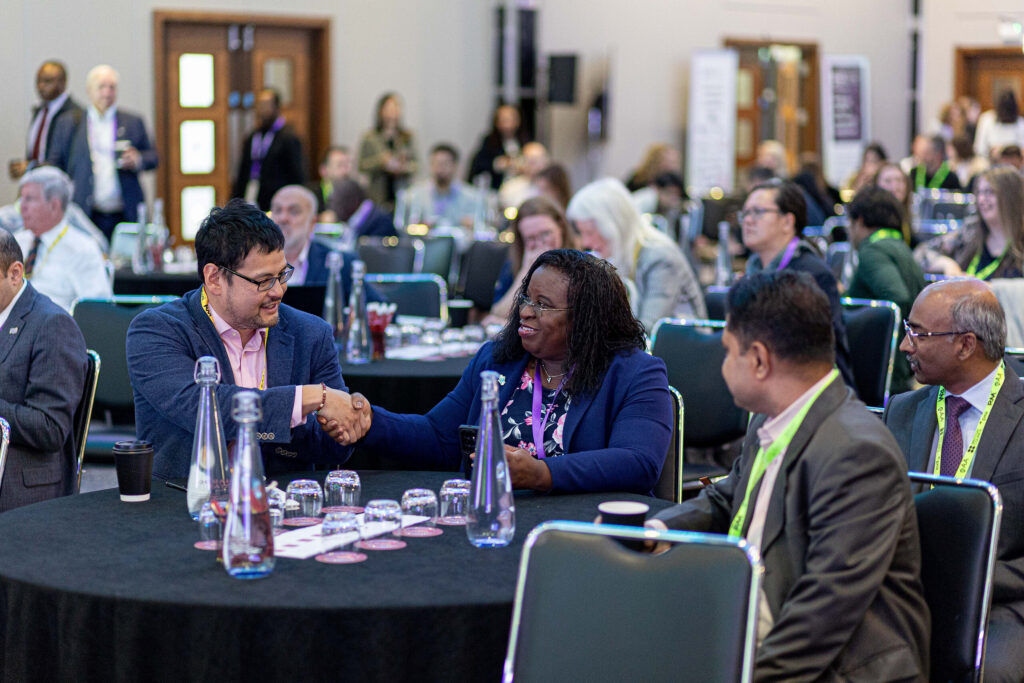
Reflections from the 2026 International e-Assessment Conference, London

Last week I was in London for the e-Assessment Association’s 2026 International Conference, and if I had to distill three days of conversations, keynotes, and hallway debates into a single word, it would be this: trust.
Not trust as a buzzword. Trust as a genuine crisis question. As AI capabilities accelerate and new tools emerge faster than most teams can keep up with, the field is being forced to reckon with something foundational: do assessment results still mean what we say they mean?
That tension ran through nearly every session I attended, and it’s one our industry can’t afford to get wrong.

The Threat Landscape Is Moving Fast
One of the clearest messages from the conference was that assessment security is no longer a static problem. Cheating technologies are growing more sophisticated by the month. What worked two years ago may not be sufficient today, and relying on yesterday’s approach while hoping for the best is not a strategy.
At the same time, there’s a real risk of overcorrecting. Security measures that create friction, penalize legitimate candidates, or feel invasive erode trust from a different direction. The most mature programs in the room were the ones thinking about security, accessibility, and candidate experience as a unified design challenge rather than competing priorities.
Human Oversight Is Not Negotiable
One point emerged from this conference without serious debate: keeping a human in the loop is not optional. Multiple sessions, including remarks from several CEOs, affirmed that governance, transparency, and meaningful human involvement are essential to maintaining confidence in assessment outcomes.
This is not a novel position for us at Integrity Advocate. It is the architecture we have built around since day one. But it was validating to hear it stated so clearly and so universally, particularly at a moment when the industry is under pressure to automate everything in the name of efficiency.
When an assessment result affects someone’s career, their credential, their livelihood, cutting corners on human review is not a cost savings. It is a liability.
Candidate Experience Is Now a Trust Variable
Something I found particularly valuable in this year’s programming was the explicit connection being drawn between candidate experience and assessment integrity. Fairness used to be discussed almost exclusively through the lens of psychometrics and policy. That framing is expanding.
How candidates are treated during an assessment, whether the process feels transparent, whether accommodations are genuinely accessible, whether the communication is clear, these factors now register as trust signals for institutions, employers, and regulators alike. A technically sound exam delivered badly is still a trust problem.

The Takeaway I’m Bringing Home
The strongest assessment programs are designing trust in from the beginning, not retrofitting it as a compliance requirement after the fact. That principle is easy to say and genuinely hard to operationalize, especially when the tooling, the regulations, and the threat environment are all shifting simultaneously.
What gives me optimism is that the people in that room in London were asking the right questions. The eAA has always been a community that takes this work seriously, and this year’s conference reflected that.
AI is not going away. The integrity gap will not close on its own. But with the right governance structures, the right human oversight, and a genuine commitment to candidate experience, it is a solvable problem.
I’m leaving with new ideas, new connections, and renewed conviction that this is exactly the work worth doing.
Brandon Smith is CEO of Integrity Advocate, a privacy-first online proctoring platform built on human-reviewed AI flagging and defensible assessment outcomes.