December 10, 2025
|
5 min read
Why Hybrid AI + Human Review Delivers Fairer, More Accurate Proctoring
AI-only proctoring is fast but context-blind, flagging neurodivergent behaviors, assistive technology, and environmental interruptions as suspicious. Human-only proctoring is fair but cannot scale consistently or cost-effectively. Hybrid AI plus human review combines the speed and pattern recognition of automation with the contextual judgment, empathy, and accountability that only people can provide. This post examines where each model falls short, what hybrid review actually delivers, and why it is becoming the baseline expectation for institutions that need proctoring to be both strong and humane.

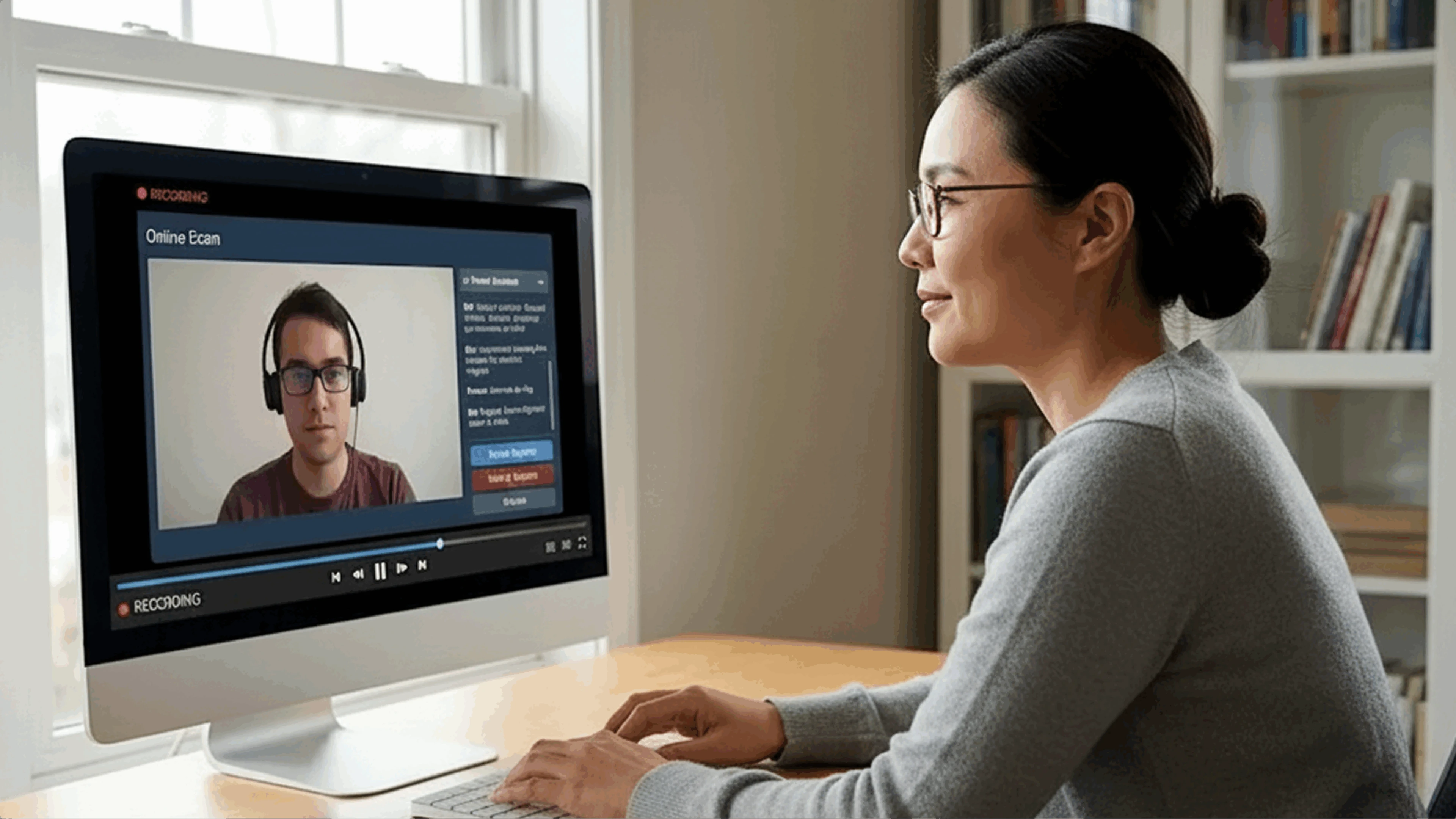
As assessment programs continue to grow in scale and complexity, institutions are rethinking how proctoring decisions are made. Early AI-only solutions promised efficiency, but the reality often included something very different: false positives, confusing flags, and test-takers who felt judged by a system that didn’t understand their context. This AI-only proctoring trend has led to unnecessary administrative burden, increased support tickets, and growing distrust from test-takers.
On the other end of the spectrum, human-only proctoring doesn’t scale easily, can be inconsistent across reviewers, and often comes with higher costs and scheduling constraints.
That’s why more organizations are turning to a hybrid model, where AI handles detection at scale and human reviewers bring the context, nuance, and judgment needed to make fair, defensible decisions.
This hybrid approach blends the consistency and speed of automation with the nuance, empathy, and real-world judgment that only people can provide.
Why AI Alone Isn’t Enough
AI is very good at spotting patterns: movement in the frame, changes in lighting, new objects entering the screen, or shifts in gaze. It can scan hours of video in seconds and flag moments that stand out against the norm.
But exams don’t happen in lab conditions. They happen in real homes, workplaces, libraries, training centers, and shared spaces, with real life happening in the background.
AI alone struggles with:
- Involuntary movements: such as fidgeting, or sensory self-regulation
- Neurodivergent behaviors: like breaking eye contact, or using comfort objects
- Assistive technology: screen readers, alternative input devices, or captioning tools
- Environmental interruptions: family members walking by, doors opening, sudden noises
- Cultural differences: different norms around eye contact, gestures, or communication
- Shared environments: where other people may reasonably be nearby
What looks “suspicious” to an algorithm might simply be a student thinking, a parent checking on a child, or a worker taking an exam in the field.
When AI misreads these situations, it creates:
- unnecessary stress for test-takers
- extra work for administrators
- credibility questions about the results
That’s where human review becomes critical.
Why Human Alone Isn’t Enough
While human reviewers bring empathy, judgment, and contextual understanding to proctoring, relying on people alone creates a different set of challenges. Human-only models struggle with consistency, scalability, and efficiency, especially as assessment programs grow.
Human-only proctoring often leads to:
- Inconsistent interpretations: different reviewers may judge the same behavior differently
- Limited scalability: staffing constraints make it difficult to support large testing volumes
- Scheduling friction: requiring live availability for every exam window
- Higher operational costs: cost per session rises quickly when scaling human labor
- Slower turnaround times: reviews, escalations, and decisions depend on human bandwidth
- Greater potential for bias: unconscious assumptions may influence interpretations
And importantly, human-only oversight simply can’t match AI’s ability to scan long sessions efficiently, identify subtle environmental changes, or pattern-match at scale.
This creates an environment where:
- test-takers may be treated differently depending on who reviews their session
- administrators face delays waiting for manual review
- institutions absorb higher labor costs and logistical complexity
- stakeholders question the consistency and defensibility of evaluation outcomes
Human review is essential, but oftentimes not sufficient on its own.
Taken together, these two extremes paint a clear picture:
- AI alone is fast, but too rigid and context-blind to be fully fair.
- Humans alone are contextual and empathetic, but too limited and inconsistent to scale.
Institutions don’t need more of one or the other, they need both working together.
That’s where a hybrid AI + human review model comes in: AI handles detection at scale, while human reviewers bring the nuance, judgment, and fairness needed to make defensible decisions.
The Best of Both Worlds: Hybrid Review
A hybrid AI + human model brings together the strengths of both approaches while minimizing their limitations. Instead of choosing between speed or fairness, institutions get a workflow that delivers both, and at scale.
In a hybrid system, AI surfaces moments that may require attention, scanning for patterns and anomalies far faster than any human could. Then, trained human reviewers step in to evaluate those moments with the context, nuance, and judgment that AI simply cannot provide.
This creates a review process that is:
Faster and more efficient
AI handles the heavy lifting of detection, dramatically reducing the time humans spend reviewing full sessions or searching for notable moments.
More accurate and reliable
Human reviewers validate AI-identified events, preventing false positives and ensuring that only meaningful issues are flagged for institutions.
Fair for every test-taker
Whether a learner is using assistive technology, or simply nervous, human context helps ensure they aren’t penalized for normal or unavoidable behavior.
Transparent and defensible
Hybrid review creates clear audit trails that document both automated observations and human decisions, a critical requirement for accreditation, appeals, and internal accountability.
Consistent across sessions
AI provides consistency in detection, while humans ensure fairness in interpretation. Together, they reduce the variability and bias that can occur with human-only models.
Scalable for growing programs
AI enables institutions to handle large volumes of exams, while human reviewers are focused on meaningful, high-value decisions rather than routine monitoring.
By combining precision with empathy, hybrid review delivers a level of balance that neither AI nor humans can achieve alone. It’s a model built for modern assessments, diverse, distributed, and held to increasingly high expectations of fairness and trust.
Why Hybrid Review Is Becoming the New Baseline
More and more institutions are putting hybrid review on their “must have” list when evaluating proctoring solutions. Some of the biggest drivers include:
1. Reducing False Positives
False accusations or unnecessary investigations damage trust. Hybrid review reduces these incidents by ensuring that flagged behavior is double-checked by a human before it’s escalated or recorded as misconduct.
2. Supporting Diverse Learners
Assessment programs serve test-takers with a wide range of needs, backgrounds, and environments. Hybrid models are better equipped to ensure that neurodivergent learners, disabled test-takers, and individuals using assistive tools are treated fairly.
3. Improving Defensibility
When results are challenged, institutions need to show not just that a flag was raised, but that it was reviewed thoughtfully. Human-reviewed outcomes, supported by clear evidence, are easier to defend and explain.
4. Building Trust in the Process
When learners know there are humans involved, not just algorithms, they’re more likely to perceive the system as fair. That perception matters for participation, satisfaction, and long-term credibility.
5. Aligning With Evolving Policies
Many regulatory and professional bodies are now paying closer attention to how high-stakes decisions are made. Hybrid proctoring aligns with expectations for human oversight in processes that can impact credentials, careers, and educational pathways.
How Integrity Advocate’s Hybrid Approach Stands Apart
Hybrid review isn’t an add-on for Integrity Advocate, it’s at the core of how the system works.
Our approach:
- Uses AI to assist, not replace, human decision-making
- Ensures that all flagged moments receive human validation
- Keeps the focus on identity, participation, and policy-relevant behavior, not unnecessary surveillance
- Respects privacy by operating within a privacy-first, minimal-data framework
- Delivers clear, actionable reporting that teams can understand without needing to decode raw AI outputs
This combination of privacy-first design, seamless LMS integration, and hybrid AI + human review gives institutions what they’ve been asking for: integrity that is both strong and humane.
Building Fairness Into Every Review
Fairness shouldn’t depend on which exam a learner takes or which proctor happens to be on duty that day. It should be built into the system.
Hybrid AI + human review moves proctoring closer to that ideal by:
- balancing speed with judgment
- combining detection with understanding
- pairing integrity safeguards with respect for test-takers
For institutions, it means more reliable outcomes, fewer disputes, and a stronger foundation of trust. For learners, it means being seen as a person, not just a set of data points.
If your program is looking to reduce friction, elevate accuracy, and strengthen confidence in your assessment process, hybrid review is one of the highest-impact changes you can make. Book a Demo today!
{{post-cta}}
Keep reading

AI vs. Human vs. Hybrid Proctoring: Which Model Best Protects Exam Integrity?
October 9, 2025
|
5 min read
As online testing expands across education, certification, and compliance training, the choice between AI-only, human-only, and hybrid proctoring has real consequences for exam integrity, fairness, and organizational risk. This post breaks down all three models, their pros and cons, and when each is the right fit, concluding that hybrid proctoring delivers the best combination of efficiency, accuracy, and fairness for most modern assessment environments.
The Evolving Landscape of Online Exam Security
As online testing continues to expand across education, certification, and compliance training, choosing the right proctoring model has never been more important.
AI-only tools promise automation and scalability. Human-only options offer fairness and empathy. Hybrid models combine the best of both, but which one truly protects exam integrity?
This article breaks down the three dominant proctoring approaches, their pros and cons, and what to consider when choosing the right fit for your organization.
1. AI-Only Proctoring: Fast, Scalable, and Automated, but Imperfect
AI proctoring tools use algorithms to detect suspicious behavior automatically, from unusual head movements to multiple voices or unauthorized devices.
While these systems offer speed and scalability, they also raise concerns about accuracy and bias.
Pros:
- Monitors large numbers of exams simultaneously
- Automates flagging and reporting
- Reduces administrative workload
Cons:
- High false positive rates (lighting, gaze, or accessibility issues)
- Lacks human context and judgment
- Raises data privacy and fairness concerns
AI-only systems can be efficient but risk misinterpretation, which can reduced trust among test takers.
2. Human-Only Proctoring: Fair and Contextual, but Limited in Scale
Human proctors oversee exams via live or recorded video, making real-time decisions based on context and behavior.
This model prioritizes fairness, empathy, and human oversight, but introduces scalability and scheduling challenges.
Pros:
- Accurate, contextual decision-making
- Builds trust with test takers
- Reduces false flags and misunderstandings
Cons:
- Labor-intensive and difficult to scale globally
- Higher cost per exam
- Limited flexibility for asynchronous or on-demand testing
Human-only proctoring ensures fairness but struggles to keep pace with modern testing needs.
3. Hybrid (AI + Human) Proctoring: The Best of Both Worlds
Hybrid proctoring blends automation and human oversight to deliver accuracy, fairness, and scalability.
AI handles initial detection, while human reviewers verify each flagged event before reports are finalized. This ensures efficiency without sacrificing integrity.
Pros:
- Reduces false positives with human verification
- Scales efficiently across time zones
- Protects privacy and fairness
- Provides auditable, compliant reporting
Cons:
- Requires platform integration
- May introduce slight delays in review turnaround
Hybrid proctoring creates the balance today’s organizations need, efficient technology guided by human discretion.
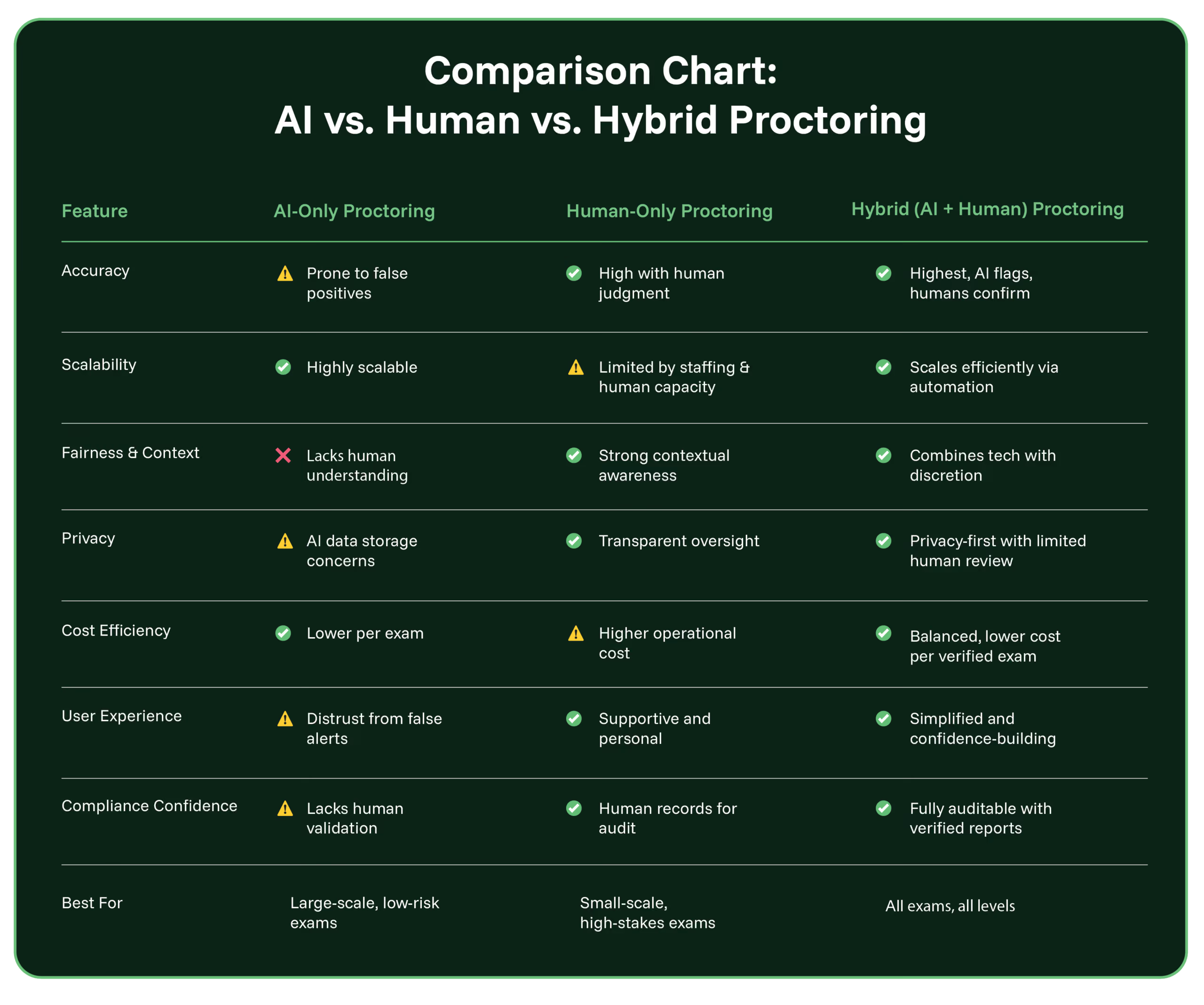
Verdict: Hybrid proctoring delivers the best combination of efficiency, accuracy, and fairness, meeting the evolving needs of modern learning and compliance environments.
When to Use Each Type of Proctoring (and When to Avoid It)
Choosing the right proctoring model isn’t just about features, it’s about fit. Here's when each approach works best, and when it might fall short.
AI-Only Proctoring
AI-only proctoring is a good fit for large-scale, low-stakes testing environments where speed and automation are priorities. It’s ideal for institutions delivering practice exams or formative assessments with minimal impact on final outcomes. If your team is constrained by staffing or budget, and real-time oversight isn’t required, AI-only can offer a fast, lightweight solution.
However, AI-only solutions are risky in high-stakes scenarios like certification, compliance, or licensure exams, especially where fairness, accessibility, and privacy are key concerns. These systems can generate false flags and lack the human context needed to distinguish genuine misconduct from harmless behavior.
Human-Only Proctoring
Human-only proctoring excels in small-group, high-stakes testing scenarios where personal interaction, empathy, and real-time judgment matter most. It's particularly useful for live, synchronous exams or specialized formats like oral exams, interviews, or hands-on assessments. If trust, fairness, and human connection are top priorities, a fully human approach ensures every test-taker is treated with context and care.
That said, this model becomes difficult to scale across large populations or global programs. It also presents challenges for asynchronous testing and tends to be more expensive due to staffing and scheduling demands. Organizations needing rapid turnaround or flexible exam windows may find this model limiting.
Hybrid Proctoring (AI + Human Review)
Hybrid proctoring combines the speed and scalability of AI with the fairness and context of human review, making it ideal for most modern assessment environments. It works especially well for mid- to high-stakes exams delivered at scale, such as workforce certification, compliance training, or higher education finals. Hybrid models support asynchronous access and bring-your-own-device testing, while still delivering human-verified, audit-ready results.
The main limitation is that some hybrid models may involve slight delays between the test and final reporting, depending on review turnaround time.
Why Hybrid Models Are the Future
Organizations are no longer choosing between technology and trust — they’re demanding both. Hybrid proctoring empowers institutions to deliver secure, privacy-compliant, and credible assessments without friction for test takers.
By combining automation and human verification, administrators get:
- Fewer false flags and student disputes
- Stronger audit trails and compliance documentation
- A smoother, more confident test-taking experience
How Integrity Advocate Sets the Standard
Integrity Advocate’s hybrid approach is designed around human-first, privacy-protected verification.
- No software installs required
- Works on any device or browser
- AI-driven detection verified by expert human reviewers
- Transparent, auditable reports administrators can trust
Integrity Advocate’s hybrid proctoring ensures fairness, compliance, and confidence in every assessment.
“Integrity Advocate integrates easily with our current system. It runs smoothly and is aesthetically pleasing; it meets the high standard we have for all our systems. It is also very effective at proctoring while not being too invasive; our users feel comfortable using it. Integrity Advocate strikes the right balance of integrity and privacy, which is hard to find!”
Ready to find the balance between automation and integrity?
Request a Demo to see how Integrity Advocate’s hybrid model redefines online exam security.
{{post-cta}}
Online Proctoring and Accessibility: How the Industry Is Failing People with Disabilities
April 14, 2022
|
5 min read
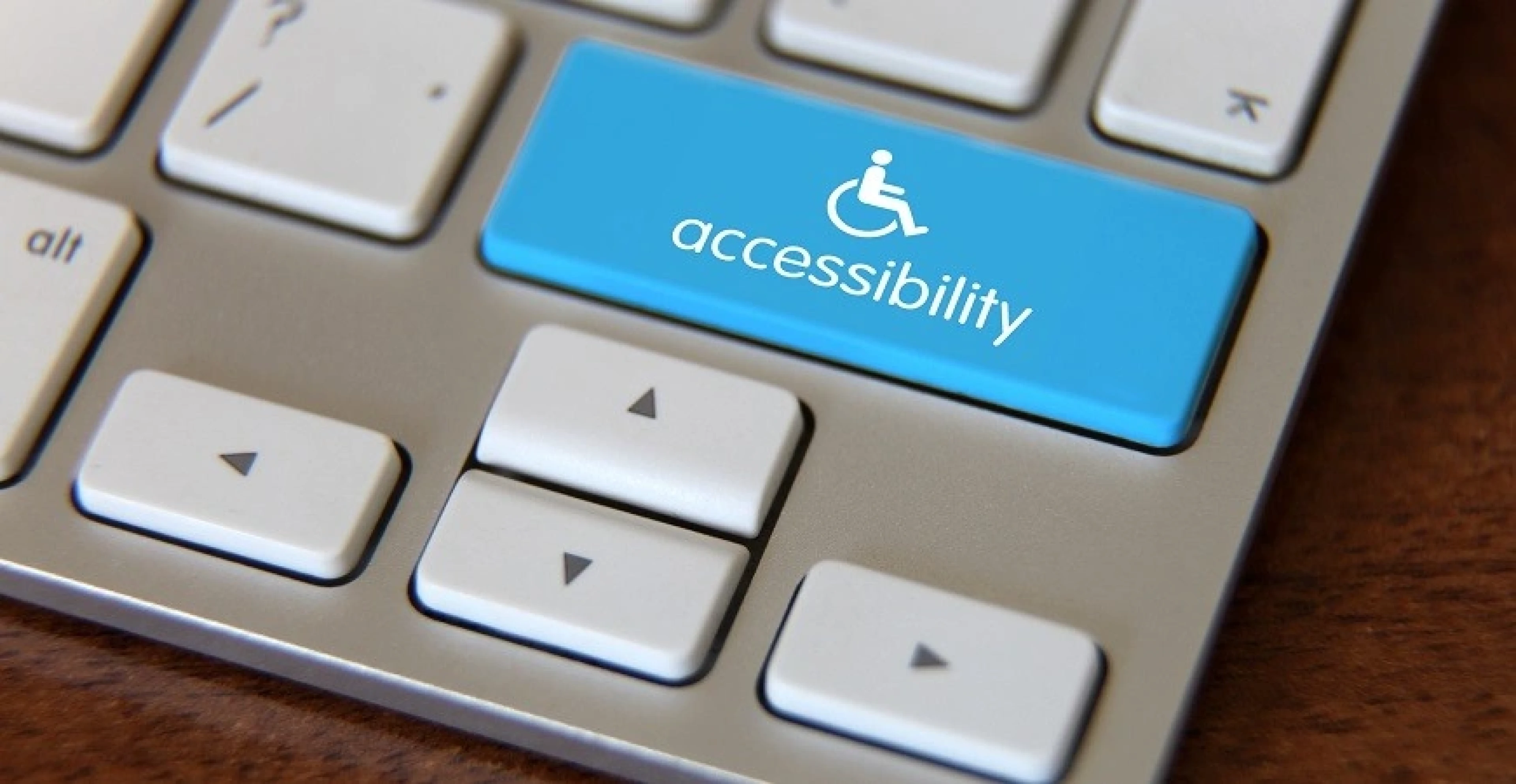
Online proctoring platforms routinely fail test takers with disabilities through room scan requirements, biometric systems that flag facial differences, and eye tracking that penalizes neurological variation. This post examines where the industry gets it wrong, what accessibility legislation now requires, and how Integrity Advocate is built to assess every test taker fairly, with WCAG 2.1 AA compliance and human review on every flagged session.
Most online proctoring platforms were not designed with disabled test takers in mind. That's not an assumption, it shows up in the product.
Some platforms require test takers to physically lift their monitor and scan the room. Others use AI-based facial monitoring that flags people with facial deformities as suspicious. Eye-tracking systems penalize unconventional eye movements — the kind that are entirely normal for people with certain neurological or visual conditions. These aren't edge cases. They're design failures that exclude a significant portion of the population from participating in online assessment at all.
As accessibility legislation tightens globally and courts begin issuing financial penalties, proctoring providers can no longer treat accessibility as optional. This post looks at what's at stake, where the industry is falling short, and what responsible design actually looks like.
Why Accessibility in Online Proctoring Matters
A disability is broadly defined as a physical or mental impairment that substantially limits one or more major life activities. The scale of the population affected is significant:
- The World Health Organization estimates that over 1 billion people globally live with some form of disability
- An estimated 285 million people worldwide experience visual impairment
- Nearly 2.5 billion people are projected to have some degree of hearing loss by 2050
- Between 250,000 and 500,000 people suffer a spinal cord injury every year
These individuals are active participants in education, professional development, and certification. They sit exams. They complete workplace training. They pursue credentials. And when a proctoring platform isn't designed to accommodate them, they are effectively locked out of those opportunities.
Where Proctoring Platforms Get It Wrong
The accessibility failures in online proctoring tend to fall into three categories:
Physical requirements that exclude
Asking a test taker to lift and rotate their monitor to scan their environment assumes a level of physical ability that many people don't have. For someone with a spinal cord injury, limited upper body mobility, or a motor impairment, this requirement isn't just inconvenient. It makes the exam inaccessible.
Biometric systems that discriminate
AI-based facial recognition and monitoring tools are trained on datasets that often underrepresent people with facial differences, asymmetrical features, or conditions that affect facial muscle movement. When these systems flag a test taker as suspicious based on appearance rather than behavior, the result is discriminatory, and the test taker has no recourse against an algorithm.
Eye tracking that penalizes neurological difference
Eye tracking is used by some platforms to detect when a candidate looks away from the screen, interpreting it as potential cheating. For test takers with nystagmus, ADHD, autism, or certain visual processing conditions, atypical eye movement is normal. Penalizing it is both inaccurate and unfair.
What the Regulatory Environment Looks Like Now
Numerous countries have begun actively enforcing digital accessibility rights, including equivalent access to electronic and information technology. In Canada, the Accessible Canada Act sets federal obligations. In the United States, Section 508 and the ADA apply to digital services. In the UK and EU, accessibility standards are increasingly enforceable with real financial consequences.
Organizations that use non-compliant proctoring platforms carry risk. When a test taker with a disability is excluded or penalized by your proctoring tool, the liability doesn't rest only with the vendor. It rests with your program too.
What Responsible Accessibility Design Looks Like
The solution isn't accommodation after the fact. It's accessibility built into the design from the start. That means:
- Involving people with disabilities in the development and testing phases
- Testing the end-user experience using assistive technologies such as JAWS, NVDA, ZoomText, Dragon NaturallySpeaking, and keyboard-only navigation
- Evaluating the product against established accessibility standards before launch
- Engaging third-party auditors to assess compliance independently
The current benchmark is WCAG 2.1 AA — the Web Content Accessibility Guidelines that set the international standard for digital accessibility. Any proctoring platform that cannot demonstrate WCAG 2.1 AA compliance should not be considered a complete solution.
How Integrity Advocate Approaches Accessibility
Integrity Advocate is built on a straightforward principle: assessment integrity should never come at the cost of a test taker's rights.
That means no room scans requiring physical ability beyond what the assessment demands. It means human review on every flagged session, so that an unusual eye movement or facial difference is assessed by a trained person with context — not an algorithm making an automated call. It means a no-download, browser-based platform that works with assistive technologies without friction.
Integrity Advocate is WCAG 2.1 AA compliant and designed to work for the full range of people who take exams, not just those who fit a narrow definition of typical.
Privacy and accessibility are not constraints on assessment integrity. They are part of what makes an outcome trustworthy.
The Bottom Line
Online proctoring platforms that haven't prioritized accessibility aren't just falling behind on compliance. They're actively excluding people with disabilities from the credentials and opportunities those assessments unlock.
Your program deserves a proctoring partner that takes this seriously, one where every test taker, regardless of ability, can be assessed fairly.
{{post-cta}}

Integrity vs. Surveillance: Is Your Proctoring Tool Monitoring Learners or Surveilling Them?
July 2, 2024
|
5 min read
There is a meaningful difference between monitoring and surveillance in online proctoring, and most programs have not thought carefully about which one they are actually doing. Monitoring confirms identity, verifies participation, and produces a defensible result. Surveillance collects everything it can, flags anything it does not recognize, and leaves programs to sort out the noise. This post draws that distinction clearly, explains what privacy-first proctoring actually looks like in practice, and makes the case for why human review is the only thing that makes an assessment result genuinely defensible when it is challenged.
There is a difference between monitoring and surveillance. Most programs running online assessments haven’t thought carefully about which one they’re actually doing, and that gap is where trust starts to erode.
Monitoring confirms that the right person completed the assessment, stayed engaged, and followed the rules. Surveillance collects everything it can, flags anything it doesn’t recognize, and leaves the program to sort out what any of it means.
One produces a defensible result. The other produces liability.
If your proctoring tool accesses the file system of a personal device, stores recordings your team will never review, or generates hundreds of automated flags with no human judgment behind them, it’s not monitoring. It’s surveillance. And your learners know the difference.
What monitoring is actually supposed to do
Every program administering online assessments has the same core need: confirm identity, verify participation, and produce a result that holds up to scrutiny.
That’s it.
You’re not trying to catalog everything that happens in a candidate’s home. You’re not trying to build a behavioral profile. You’re trying to answer three questions:
- Was this the right person?
- Did they complete the assessment under appropriate conditions?
- Can you stand behind the result if it’s challenged?
A well-designed proctoring approach answers all three. An over-engineered one tries to answer questions nobody asked, and in doing so, creates new problems. More data. More noise. More privacy exposure. And a test-taking experience that generates complaints before a single result is issued
Where surveillance starts
Privacy-first proctoring is not a softer version of security. It’s a more precise one.
It starts with a design principle: collect only what is necessary to confirm identity and verify engagement. Nothing beyond that scope. No recordings stored by default. No system-level device access. No behavioral data used outside the bounds of the specific assessment.
In practice, that looks like this:
No downloads or extensions. The assessment runs in a browser. No software installs, no hidden permissions, no access to personal files or background applications. A test taker can sit the exam on any device without IT involvement or configuration.
Proportionate data collection. Every feature and every data point collected should have a clear answer to the question: why does this make the result more defensible? If the answer is “it doesn’t,” it shouldn’t be collected. Surveillance produces volume. Monitoring produces clarity.
Data minimization by design. The only data collected is what’s needed to produce a defensible result: identity verification, participation confirmation, and a reviewable record of any flagged behavior. Sensitive data, including ID images, is deleted within 24 hours.
Compliance built in, not bolted on. GDPR, PIPEDA, FERPA, and SOC2 compliance aren’t checkbox items. They reflect a commitment to proportionate data collection, the kind of approach that holds up when regulators or institutional counsel start asking questions.
Human review is what makes the result defensible
Here’s what automated flags can’t tell you: whether a behavior was actually a problem.
An algorithm can detect that a second face appeared in the frame. It cannot tell you that the second face belongs to a child who walked in, not an accomplice. It can flag an unusual eye movement pattern. It cannot determine whether that pattern indicates academic dishonesty or a medical accommodation. It can detect a background sound. It cannot decide whether that sound matters.
Those determinations require a person.
At Integrity Advocate, every flagged session is reviewed by a trained human reviewer before any outcome is issued. Not as a premium tier. Not as an add-on. As the standard, at every price point.
That’s the difference between a defensible result and an automated flag you have to explain to a grievance committee.
Programs that rely on automated proctoring alone are producing outcomes they cannot fully stand behind. When a result is challenged, and eventually one will be, “the algorithm flagged it” is not a sufficient answer. A documented, human-reviewed decision is.
The question your program should be asking
Before your next contract renewal or platform evaluation, ask this: what does your current proctoring tool collect, and who reviews it before a result is issued?
If the answer is “a lot” and “no one,” that’s the surveillance model. It may feel thorough. It isn’t defensible.
Privacy-first online proctoring isn’t about doing less. It’s about doing exactly what’s necessary, with human judgment behind every decision that matters. That’s what produces results your program can stand behind. It’s what earns trust from your learners. And it’s what holds up when the stakes are highest.
Integrity doesn’t require surveillance. It requires precision.
{{post-cta}}
Frequently asked questions
Find answers to the most commonly asked questions from our clients.
Hybrid proctoring combines automated AI detection with trained human review. AI monitors sessions at scale, scanning for behavioral patterns and anomalies far faster than any person could. When a potential issue is flagged, a trained human reviewer evaluates the moment with context, judgment, and empathy before any decision is made or recorded. This model delivers the speed and consistency of automation alongside the fairness and defensibility that human judgment provides.
AI detects patterns against a norm but cannot interpret context. A learner using a screen reader, breaking eye contact due to a neurodivergent condition, having a family member walk by, or taking an exam in a shared workspace may all appear suspicious to an algorithm that has no way to understand the situation. These false flags create stress for test-takers, administrative work for institutions, and credibility questions about the results. Human review eliminates these problems by assessing the actual context before any flag becomes a finding.
Human-only proctoring requires live availability for every exam window, generates inconsistent interpretations across different reviewers, cannot match AI's ability to scan long sessions efficiently, and becomes significantly more expensive as testing volumes grow. These constraints create scheduling friction, inconsistent outcomes depending on who conducts the review, and operational costs that rise quickly with program size. Human review is essential but insufficient alone.
Neurodivergent learners may exhibit behaviors that AI systems flag as suspicious, including atypical eye contact, self-regulatory movements, or the use of comfort objects. Learners using assistive technology such as screen readers or alternative input devices may also generate anomalous signals. Human reviewers can identify these situations and ensure that legitimate, non-violating behavior is not treated as misconduct. Hybrid review is a core component of accessible, equitable assessment design.
When a result is challenged in an appeal, accreditation review, or regulatory inquiry, institutions need to demonstrate not just that a flag was raised but that it was reviewed thoughtfully by a person with the context to make a fair decision. Human-reviewed outcomes supported by clear evidence and documented reasoning are far more defensible than automated flags alone. The hybrid model creates the audit trail that defensibility requires.
Yes. Research and institutional experience consistently show that test-takers perceive proctoring as fairer when they know humans are involved in the decision-making process rather than algorithms acting alone. That perception of fairness reduces exam anxiety, increases participation, and supports the long-term credibility of the assessment program.